
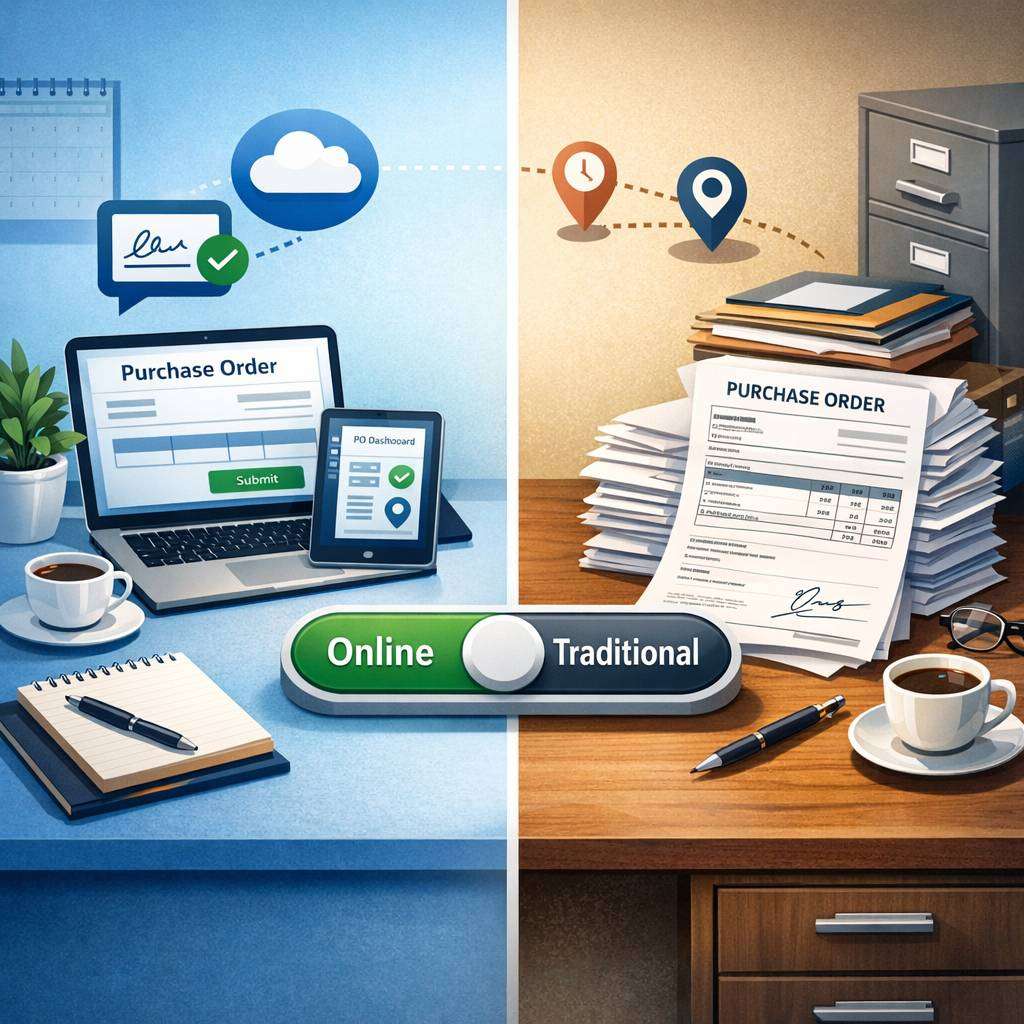
Online purchase orders streamline procurement by eliminating manual entries and speeding approvals, making procurement teams more efficient. Businesses can track spending, enforce controls, and reduce errors with an integrated system. For more guidance, visit the resource below. https://www.medius.com/blog/blog-how-to-accept-pos/ This approach supports faster approvals, better visibility, and scalable cost management across departments.
In today’s fast-paced commercial environment, organisations must decide how to manage their purchasing processes. The choice between online purchase orders and traditional methods can significantly impact efficiency, cost, and supplier relationships. As an expert in procurement technology, I will outline the key considerations, the benefits of modern systems, and practical guidance to help you determine whether a cloud based purchase order software or a more conventional, paper-driven approach best serves your organisation.
Understanding the landscape
Traditionally, purchase orders (POs) have been generated on paper or via basic emails and spreadsheets. While familiar, these methods can be error‑prone and slow, especially as organisations scale. In contrast, purchase order systems—ranging from lightweight tools to robust cloud based purchase order software—offer structured workflows, real‑time visibility, and integration with finance and inventory management.
A cloud purchase order system provides access to your purchase order management software from anywhere, encourages standardisation, and simplifies multi‑user collaboration. This is particularly valuable for organisations with dispersed teams, remote approvers, or multiple suppliers. For UK organisations, a UK‑focused solution often includes local tax handling, compliance features, and reporting aligned with British business practices.
Looking to streamline procurement? Online purchase orders simplify buying, reduce manual errors, and accelerate approvals for teams of any size. With secure platforms, you can track status, compare suppliers, and consolidate spend from a single dashboard. For businesses seeking reliable solutions, visit https://cloudb2b.co.uk/ to explore features, demos, and competitive pricing. Implementing online purchase orders cuts processing time, enhances visibility, and helps maintain compliance across departments. Start today and transform your purchasing workflow with confidence.
What modern purchase order systems deliver
- Real‑time approval workflows: Digital PO workflows route requests to designated approvers, with automatic reminders and policy enforcement. This reduces lag and ensures adherence to procurement policies.
- Centralised data and transparency: All purchase orders reside in a single system, making it easier to track status, forecast demand, and reconcile invoices.
- Integration with accounting and ERP: Purchase order management software can integrate with accounting packages, ERP systems, and inventory management, enabling seamless financial flows and stock control.
- Supplier collaboration: Cloud based PO software often includes supplier portals, allowing suppliers to view PO details, confirm deliveries, and submit invoices directly.
- Compliance and controls: Automated checks on budget, spend limits, and tax rules help reduce maverick buying and improve governance.
- Analytics and reporting: Built‑in reporting provides insights into supplier performance, cycle times, and spend categories, informing strategic procurement decisions.
Online purchase orders streamline procurement with faster approvals, real-time tracking, and reduced manual errors. Companies can standardize workflows, improve supplier communication, and gain visibility across all spending. Embrace digital efficiency today and explore trusted solutions for streamlined procurement processes. https://www.sosinventory.com/digital-purchase-orders
Trade‑offs of traditional methods
- Manual processing and duplication: Paper POs require manual data entry into finance systems, creating opportunities for errors and delays.
- Limited visibility: Status tracking is often fragmented across departments, vendors, and mail channels.
- Longer cycle times: Approvers may be unavailable, leading to extended lead times and stockouts.
- Higher administrative costs: Printing, mailing, and filing contribute to ongoing expenses and inefficiencies.
- Difficulty in scaling: As the organisation grows, dispersed processes become harder to coordinate and audit.
Key decision factors
When evaluating whether to shift from traditional methods to an online solution, consider these factors:
- Volume and velocity of POs: High PO volumes benefit from automation to prevent bottlenecks and reduce cycle times.
- Geographic dispersion: Organisations with multiple sites or remote teams gain from cloud access and centralised workflows.
- Control and compliance needs: If your governance requires strict controls, automated validation and audit trails are highly valuable.
- Supplier relationships: Supplier portals and electronic invoicing improve collaboration and reduce touchpoints.
- IT strategy and cost: Cloud based purchase order software typically reduces capital expenditure and accelerates deployment, but consider total cost of ownership and data security requirements.
- Industry and regulatory context: Certain sectors have specific compliance demands (e.g., VAT, invoicing rules) that cloud purchase order systems can easiest address.
Choosing between cloud based and on‑premises options
- Cloud based purchase order software: Best for organisations seeking flexibility, rapid deployment, scalable user access, and reduced IT maintenance. Benefits include automatic updates, predictable subscription costs, and accessibility across devices. If you operate in the UK, cloud purchase order systems marketed as purchase order software uk often emphasise local support and compliance with UK tax rules.
- On‑premises or traditional systems: May appeal to organisations with strict data sovereignty concerns, bespoke integration needs, or existing infrastructure designed around a legacy platform. However, these setups typically require dedicated IT resources and ongoing maintenance.
A practical approach is to pilot a cloud purchase order system with a defined scope, such as one business unit or a critical supplier group, before a wider rollout.
Implementing a transition plan
- Map current processes: Document how POs are created, approved, and reconciled today. Identify pain points, bottlenecks, and data handoffs.
- Define success metrics: Establish targets for cycle time reduction, cost savings, error rates, and supplier satisfaction.
- Align stakeholders: Secure sponsorship from finance, procurement, IT, and end users. Create a cross‑functional project team to oversee the rollout.
- Choose the right software: Evaluate options for purchase order systems based on scalability, ease of use, integration capabilities, security, and regional support. For organisations in the UK, emphasise features in cloud purchase order software uk that address local taxation and reporting.
- Plan data migration: Prepare a clean data transfer from legacy systems, cleansing duplicates and ensuring supplier mappings are accurate.
- Configure workflows and controls: Set approval routes, spend thresholds, and policy checks that reflect your governance framework.
- Train and support users: Provide role‑based training, quick reference guides, and ongoing support to maximise adoption.
- Monitor and optimise: Use analytics to track performance, refine thresholds, and adjust supplier performance targets.
The role of supplier collaboration
Cloud purchase order systems frequently include supplier portals that enable buyers and suppliers to collaborate in near real time. Suppliers can confirm order details, share delivery notices, and submit invoices electronically. This reduces email backlogs, shortens payment cycles, and improves supplier trust. A well‑integrated purchase order management software ecosystem also supports improved reconciliations between POs, receipts, and invoices, driving smoother financial close.
Security and compliance considerations
Security is a critical factor when adopting cloud based solutions. Look for features such as role‑based access, data encryption at rest and in transit, robust authentication, and clearly defined data residency options. For organisations operating in the UK or EU, ensure the solution complies with relevant data protection regulations and keeps detailed audit trails for governance purposes.
What to expect in the short and long term
In the short term, expect faster cycle times, greater clarity of spend, and improved control over approvals. In the longer term, the benefits compound as data quality improves, forecasting becomes more accurate, and supplier performance insights drive more strategic supplier selection and contract optimisation.
Choosing between online purchase orders and traditional methods is not a binary decision but a continuum. For many organisations, a phased migration toward cloud based purchase order software or a hybrid approach that preserves certain manual steps during a transition can offer a balanced path forward. By evaluating your organisation’s unique needs against the capabilities of modern purchase order systems, you can select a solution that enhances efficiency, governance, and value across the procurement lifecycle.