
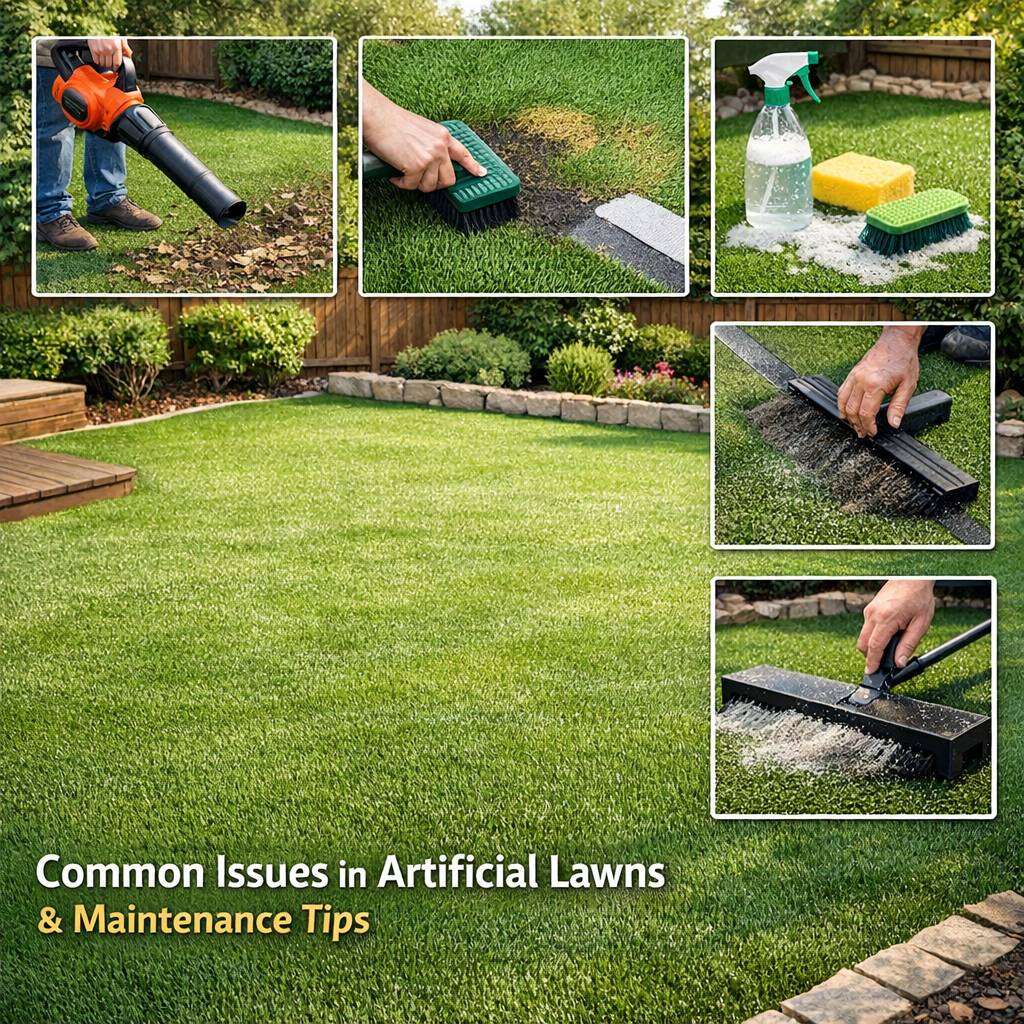
Artificial lawns offer year-round greenery with low maintenance, but even the best synthetics can present hiccups. In this guest post, I’ll share practical, expert guidance on common issues you might encounter and how to tackle them effectively. From debris and flattening to odours and poor drainage, these maintenance insights will help you keep your artificial grass looking pristine with minimal effort.
Understanding the basics of artificial lawn care
Proper artificial lawn care starts with a solid routine. Regular maintenance of artificial grass includes brushing to keep pile upright, removing debris, and occasional cleaning to prevent odours. A well-planned routine reduces wear, preserves appearance, and extends the life of your investment. When discussing maintenance you’ll often see terms like artificial grass maintenance, maintenance of artificial grass, and artificial pitch maintenance, all of which centre on keeping the surface clean, safe, and visually appealing.
Common issue: Flattened or matted fibres
One of the most frequent complaints is flattened or matted fibres, especially in high-traffic areas or after heavy use. This can give the lawn a dull, lifeless look and reduce bounce in play spaces.
What to do:
- Regular brushing is essential. Use a stiff-bristled brush and brush against the pile direction to lift fibres back up. Do this at least once a week and more often in busy periods.
- For longer piles, a powered brush can be beneficial, but ensure the machine is suitable for artificial grass to avoid damage.
- Check for wear in heavy-use zones and consider a fibre rejuvenation spray if approved by the manufacturer.
- If flattening persists, consult a local installer for a maintenance artificial grass service. They can re-tuft specific areas or replace damaged sections.
Maintenance of artificial grass is easiest with regular brushing, debris removal, and periodic cleaning. For comprehensive tips, visit this guide: https://www.tapi.co.uk/the-ideas-hub/care-guides/artificial-grass-care-guide. A well-kept lawn lasts longer and stays pristine.
Common issue: Infestation of weeds or pests
Weeds and pests can sometimes encroach from gaps around the edges or through drainage outlets. This is more about edge maintenance and drainage than the grass itself.
What to do:
- Inspect and seal edges to minimise weed ingress. Blazing a neat edge with appropriate sealant helps.
- Clear leaves and organic matter promptly, as decomposing debris can encourage weed growth.
- For stubborn weed encroachment, apply a weed killer compatible with artificial grass, preferably after reading the manufacturer’s guidelines. Avoid products that could degrade the grass backing.
- If pests like ants become an issue, a pest control professional can advise on pet-friendly, non-damaging solutions.
Common issue: Odours and staining
Without organic soil to harbour bacteria, odours can still develop from trapped moisture, pet deposits, or organic debris. Stains from food, wine, or mud can also mar the appearance.
What to do:
- Regular cleaning with a mild soap solution and a soft-bristled brush helps remove residues. Rinse thoroughly to avoid soap build-up.
- For pet-related odours, rinse the area after use and consider a light application of a specialised artificial grass deodoriser if the manufacturer approves it.
- Dewatering is important in wet climates. If you notice lingering damp patches, ensure the drainage system is clear and functioning.
Common issue: Poor drainage or water pooling
Water pooling can occur if drainage is insufficient or if the surface level is not properly sloped. Prolonged standing water leads to fungal growth and discolouration.
What to do:
- Check that your installation had appropriate fall and drainage. Most installations are designed with a subtle slope to facilitate runoff.
- Clear drainage channels and ensure gully pots are free from blockages.
- In areas with heavy rainfall, you may need to maintain ground setup, ensuring the base layer remains stable and continues to provide adequate drainage.
- If drainage continues to be an issue, consult a professional about adding a drainage system or re-leveling the surface.
Common issue: Loose edges and seams
Edges that lift or seams that separate can create trip hazards and look unattractive. This is more common in installations that weren’t correctly anchored or after ground movement.
What to do:
- Inspect edges regularly and resecure using the recommended adhesive or seam tape from the manufacturer.
- Avoid heavy loads or aggressive use on the affected area until repairs are completed.
- For large areas, professional re-laying or edge repair may be more economical in the long term than repeated DIY fixes.
Maintaining a pristine, even surface requires regular care and patience. For best results, schedule frequent brushing, debris removal, and proper cleaning to prevent matting and odors. A consistent routine preserves appearance and longevity, saving time and money in the long term. maintenance of artificial grass is easier with seasonal checks and professional tips.
Common issue: Colour fading and sun damage
Over time, UV exposure can cause some fading or colour variation, especially in low-quality products.
What to do:
- Choose a reputable product with UV stabilisers and high fade resistance—this is a key consideration in artificial grass maintenance near me when comparing suppliers.
- Keep the lawn shaded where possible, and clean regularly to prevent the sun from baking grime into the fibres.
- If fading is significant, consult the installer about options for a retightening or replacement of the affected area.
Maintenance strategies: a practical workflow
- Weekly: Brush the surface to keep fibres upright; remove leaves and debris; spot-clean stains.
- Monthly: Deep clean with a mild detergent, rinse thoroughly, and check for loose seams or edges.
- Bi-annually: Have a professional inspection to assess padding, base integrity, and drainage performance, especially after heavy usage or adverse weather.
Selecting the right professional services
When searching for maintenance artificial grass or artificial grass maintenance uk services, look for providers with proven experience, clear guarantees, and transparent pricing. Ask about their approach to artificial pitch maintenance, fibre types, and the recommended maintenance schedule for your specific product. If you’re looking for local expertise, “artificial grass maintenance near me” can yield installers who understand regional weather patterns and common issues.
By staying vigilant and following a consistent maintenance plan, you can prevent many of these common issues and extend the life and beauty of your artificial lawn. If you ever doubt a problem, a quick consult with a qualified installer can save time and protect your investment while keeping your outdoor space looking immaculate.