
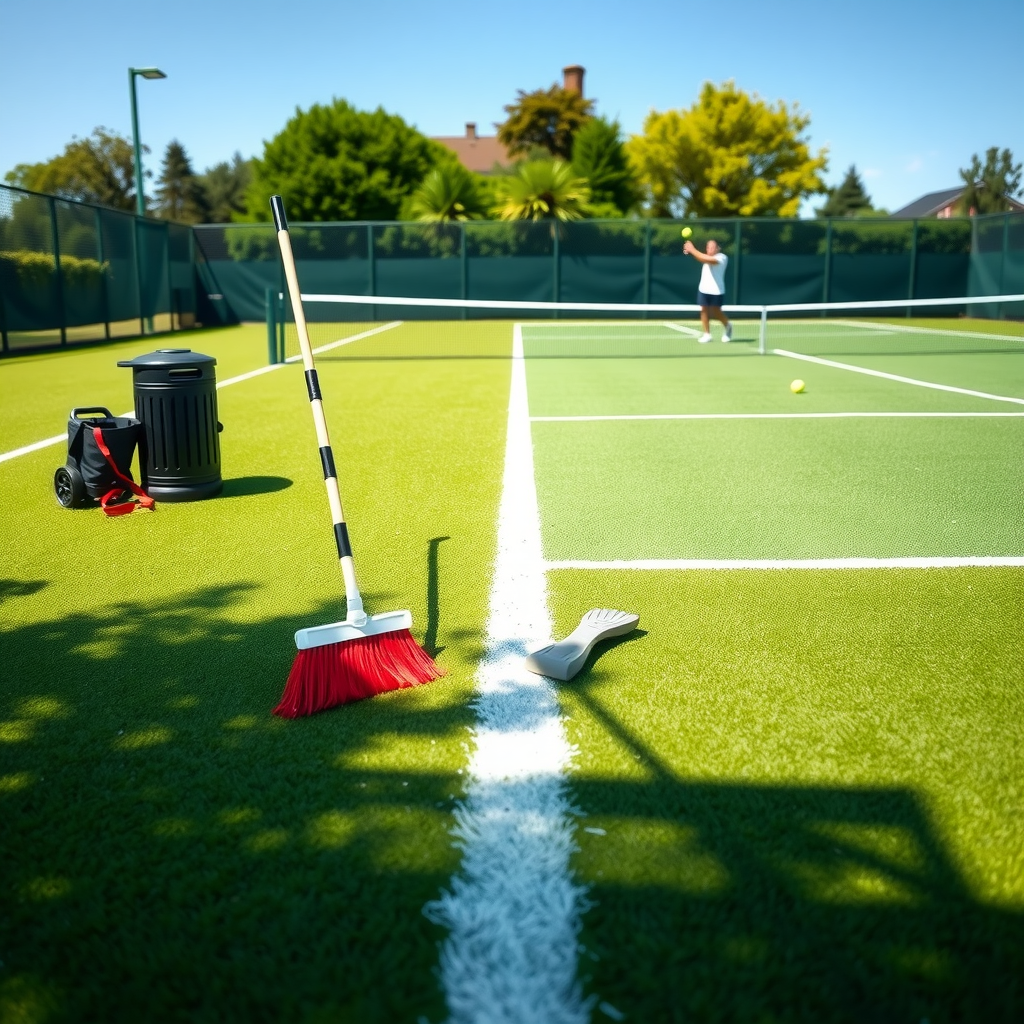
Tennis is a sport that combines skill, strategy, and stamina, making it a favourite pastime for many. However, the enjoyment of tennis is heavily influenced by the condition of the tennis court. A well-maintained court not only enhances the playing experience but also ensures safety for players. One of the most critical aspects of this maintenance is regular cleaning, especially for artificial grass tennis courts. This post delves into the significance of consistent cleaning and maintenance, highlighting its impact on longevity and playability.
The Importance of Tennis Court Cleaning
Regular tennis court cleaning plays a pivotal role in preserving the quality of the surface. Over time, dirt, debris, and moss can accumulate, affecting both the aesthetics and the playability of the court. Regular cleaning ensures that the surface is clear, allowing for optimal ball movement and reducing the risk of injury. Furthermore, a clean court reflects professionalism and respect for the sport, encouraging greater participation from club members and guests.
Benefits of Artificial Grass Tennis Courts
Artificial grass tennis courts have gained immense popularity due to their low maintenance requirements and durability. Unlike traditional clay or grass courts, artificial surfaces are resistant to weather-related wear and tear. However, to maximise the lifespan and performance of an artificial grass tennis court, regular cleaning is essential. This surface maintains its aesthetic appeal and functionality only if debris such as leaves, mud, and other foreign materials are removed promptly. Moreover, an unclean court can lead to the growth of moss and mould, posing risks to players and further undermining the court’s integrity.
Tennis Court Resurfacing: When Clean Isn’t Enough
Despite regular cleaning, certain factors may still threaten the longevity of your tennis court. Over time, even the highest quality artificial grass tennis court requires resurfacing. Signs that resurfacing may be necessary include uneven playing surfaces, wear from excessive use, or discolouration of the playing area. Resurfacing not only restores the court’s condition but also improves playability. Regular maintenance practices, including cleaning, can delay the need for resurfacing, ultimately saving clubs money and ensuring that players always compete on a high-quality surface.
Ensuring Quality Through Tennis Court Repairs
In the event that a tennis court experiences more significant damage such as tears in the artificial grass or issues with the underlying structure, timely repairs become critical. Regular cleaning helps identify potential issues before they escalate into costly repairs. It’s recommended to conduct a thorough inspection of the court during each cleaning session, checking for any signs of deterioration or damage. By addressing these issues promptly, you can maintain the court’s playability and extend its lifespan efficiently.
Effective Tennis Court Artificial Grass Maintenance
Maintenance of artificial grass tennis courts requires a unique approach compared to traditional surfaces. The cleaning regime should include the removal of debris, brushing to keep the fibres upright, and checking for issues like compaction or contamination. Regular use of a power brush can help keep the piles of the grass standing, ensuring optimal ball response and reducing the risk of surface wear. Additionally, employing a suitable cleaning solution that is safe for artificial grass can enhance the effectiveness of the cleaning process.
Tennis court cleaning is essential for maintaining optimal playing conditions and prolonging the lifespan of your surface. Regular upkeep prevents the accumulation of dirt, algae, and debris, ensuring safe and enjoyable matches. For professional tennis court maintenance, consider partnering with experts who understand the unique needs of sports surfaces. Explore more at www.artificialgrassmaintenance.co.uk.
The Process of Tennis Court Installation and Its Relevance to Maintenance
When it comes to tennis court installation, the quality of both materials and labour is paramount. A well-installed court is more resistant to damage and easier to maintain. Investing in high-quality installation can significantly reduce the frequency and severity of necessary repairs and maintenance. Furthermore, clubs should ensure that contractors provide clear guidelines on the appropriate methods for maintaining the surface after installation, as this knowledge will be instrumental in extending the court’s life and ensuring playability.
Conclusion
Regular cleaning and diligent maintenance are essential practices for any artificial grass tennis court. This commitment not only enhances the playing experience but also prolongs the lifespan of the court. By investing in quality cleaning procedures, addressing repairs promptly, and adhering to best practices during installation, tennis clubs can ensure that their courts remain in optimal condition, welcoming players for many years to come.